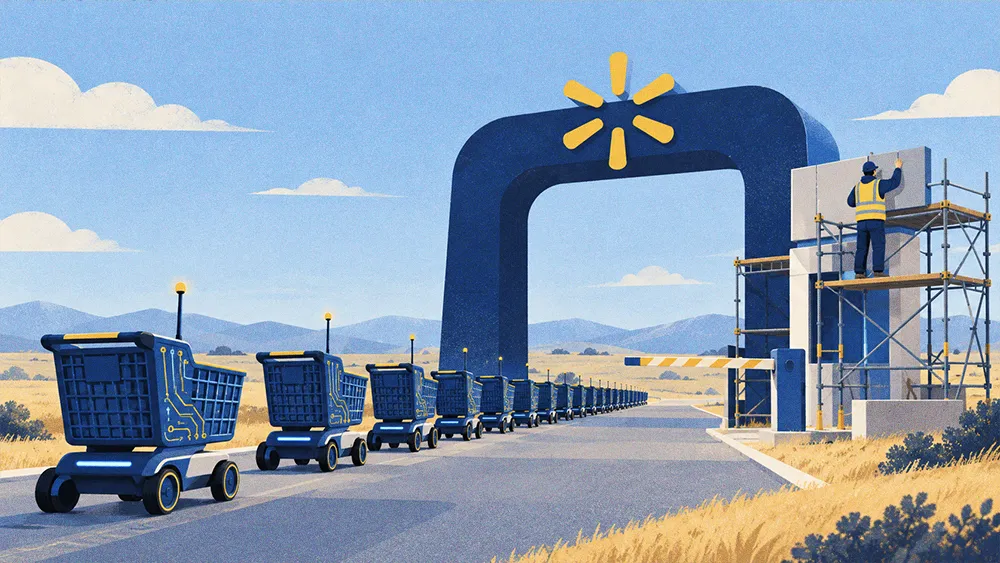


Most AI pilots don’t fail because the model was wrong. They stall because nobody was hired to do the work between a working demo and a production system.
Only a quarter of organizations have moved 40% or more of their AI pilots into production, according to Deloitte’s State of AI in the Enterprise 2026. Respondents said the skills gap is the biggest barrier to integrating AI into their operations, yet their most common response was to train the broader workforce in AI fluency (53%). Only 36% are hiring specialized talent to drive AI initiatives. A fluency course helps people use AI tools, but it doesn’t produce the engineer who gets a model into production. Until companies staff that work, pilots will keep ending as demos.
Key findings
Only 25% of organizations have moved 40% or more of their AI pilots into production, per Deloitte’s 2026 survey of 3,235 leaders.
The skills gap is the top barrier to integrating AI, but 53% of companies respond with broad AI education, while 36% hire specialized talent and 19% change their mix of full-time, contract and gig workers.
MIT’s NANDA initiative found that 95% of organizations saw no measurable return from generative AI pilots, and traced the gap to implementation, not model quality.
AI tools bought from specialized vendors or built with partners succeeded about 67% of the time. Internal builds succeeded only a third as often.
Only one in five companies has a mature governance model for autonomous AI agents, even as agent use is expected to rise sharply.
Pilots are built to succeed
Pilots usually run with a small team, clean data and little at stake. That setup is designed to get a fast yes. Production is a different job. The system has to run on live data, connect to the systems around it, pass security and legal review, be monitored for drift, and have someone responsible when it breaks at 2 a.m.
None of that is model work, and most pilot teams aren’t built for it. A typical pilot pairs a data scientist on loan with a vendor or an innovation lab. Once the demo works, that team moves on to the next pilot. The production work is left to whoever is available, which often means nobody.
MIT’s NANDA research came to the same conclusion from the other direction. The report found that 95% of organizations saw no measurable return from generative AI pilots, and its authors blamed how companies implement the technology rather than the quality of the models.
The production team nobody hired
Getting a pilot into production takes a set of roles that rarely appear in the pilot’s business case:
Data engineers who build pipelines that work on live, messy data, not the cleaned sample used in the demo. In ad tech, that includes identity, consent and clean-room data, a gap Talent Observer covered in [The hardest ad tech hire post - link once live].
ML platform or MLOps engineers who deploy the model, version it, monitor it and roll it back when it drifts.
Evaluation owners who define what "working" means and test it continuously after launch.
Integration engineers who connect the model to the systems people already use, so it becomes part of daily work instead of a separate tool.
A business owner who is accountable for the outcome the AI is meant to improve.
Each of these is a hire or a contract, and the technical ones are among the hardest to fill. Technical roles take about 10 weeks to fill on average. A pilot that wraps up in March without production roles already open won’t have a team until the summer, by which point the sponsor’s attention has often moved on.
Training doesn’t fill an engineering seat
Deloitte’s data shows where the response goes wrong. Companies correctly identify skills as the barrier, then spend mostly on fluency. Educating the workforce leads the list of talent responses at 53%, followed by upskilling and reskilling at 48%. Hiring specialized talent for AI initiatives comes further down at 36%. Changing the balance of full-time, contract and gig workers ranks last at 19%.
Fluency training matters for adoption. But training a marketing team or an account management group to use AI won’t produce someone who can run an evaluation pipeline or debug a failing model in production. Those are engineering skills, and they come from hiring, contracting or deep reskilling of technical staff.
Fluency also invites a measurement trap. Gaurav Shenolikar, Director of Engineering at Mediaocean, told Talent Observer that he judges AI adoption by whether outcomes improved, not by how many prompts his teams run. A company that tracks usage can report rising adoption while its pilots stay stuck.
Partnered builds do better because they bring experience
MIT’s data points to a practical fix. AI tools purchased from specialized vendors or built with partners succeeded about 67% of the time, while internal builds succeeded about a third as often. One likely explanation is that partners bring people who have taken systems into production before, along with the integration, monitoring and evaluation habits that internal pilot teams usually lack.
The lesson for engineering leaders is about staffing, not just buying. The engineers who know how to get AI into production are rarely on the team that built the pilot. Talent Observer has covered how companies end up paying for the technology and for the people needed to make it work. Budgeting for both from the start makes those costs predictable.
One workable model is to bring in experienced contract specialists for the push from pilot to production and pair each one with a full-time owner who stays after launch.
Ad tech’s pilots are next in line
Media and ad tech companies are approaching the same wall. In IAB’s State of Data 2026, about half of buy-side decision-makers said they were scaling AI within their measurement frameworks. More than 70% of the rest expect to do so within one to two years. The same survey found that fewer than 40% have or plan solutions for their concerns about data quality, accuracy, and legal and security risk.
That makes production staffing an even bigger issue in ad tech. Bidding models, measurement tools and buying agents all run on live auction data at high volume. They depend on consent and identity data that has to be right on every record, and they need monitoring to catch a model that starts overspending before the campaign ends.
Agents raise the stakes again. Deloitte found that only one in five companies has a mature governance model for autonomous AI agents. A buying agent that moves from pilot to live spend without an evaluation owner and a clear way to roll it back is a financial risk, not just a technical one.
Staff the pilot as if it’s going to production
Teams that consistently ship AI tend to make staffing part of the pilot itself.
Name the production owner before the pilot starts. Someone should own the outcome, the budget and the decision to scale or stop.
Put production roles in the business case. Include data, platform, evaluation and integration headcount, or the contracts that cover them, alongside the license cost.
Open roles while the pilot runs. At roughly 10 weeks per technical hire, waiting for a successful demo adds a quarter of dead time.
Bring in production experience on contract. Pair each specialist with a full-time owner who keeps the knowledge after launch.
Measure outcomes, not usage. Define the business metric the pilot has to move, and the result that would end it.
Run fewer pilots. A pilot the company can’t staff into production is mostly a demo.
AI models are getting cheaper and more capable every quarter, so model quality is rarely the constraint. The difference between companies that ship AI and companies that keep piloting it comes down to whether anyone was hired to carry the work into production.
Frequently asked questions
Why do AI pilots fail to reach production? Usually because the work production requires was never staffed: live data pipelines, deployment and monitoring, ongoing evaluation, integration and clear business ownership. Deloitte found the skills gap is the top barrier, and MIT traced most failures to implementation rather than model quality.
What percentage of AI pilots make it to production? In Deloitte’s 2026 survey, only 25% of organizations had moved 40% or more of their AI pilots into production.
What roles do you need to take an AI pilot to production? Data engineers, ML platform or MLOps engineers, evaluation owners, integration engineers and a business owner accountable for the outcome.
Will AI training for employees fix the skills gap? It helps adoption, but it doesn’t fill engineering roles. Deloitte found 53% of companies respond to the AI skills gap with broad workforce education, while only 36% hire specialized talent.
Is it better to buy AI tools or build them in-house? MIT’s research found that tools purchased from vendors or built with partners succeeded about 67% of the time, while internal builds succeeded about a third as often. Experienced partners usually bring production skills that internal pilot teams lack.
Who should own an AI project after the pilot? A named business owner accountable for the outcome, supported by full-time engineers who own the data and platform. This should be decided before the pilot starts, not after it succeeds.
Should companies use contractors to move AI pilots into production? Contract specialists work well for the time-bound push from pilot to production, as long as each is paired with a full-time owner who keeps the knowledge after the contract ends.
How long does it take to staff an AI production team? Technical roles take about 10 weeks each to fill on average, per Ashby data. Teams that open roles while the pilot is running avoid a quarter of delay.
Why is AI production staffing harder in ad tech? Ad tech models and agents run on live auction data, depend on consent and identity data, and can overspend real budgets if they aren’t monitored. They need data, evaluation and governance roles in place before they go live.