
How we show up to our tools can shape the advice they give us. When a tool understands your full picture, you get a better assistant.
 Brendan RodgersFounder @ Thread & Stack
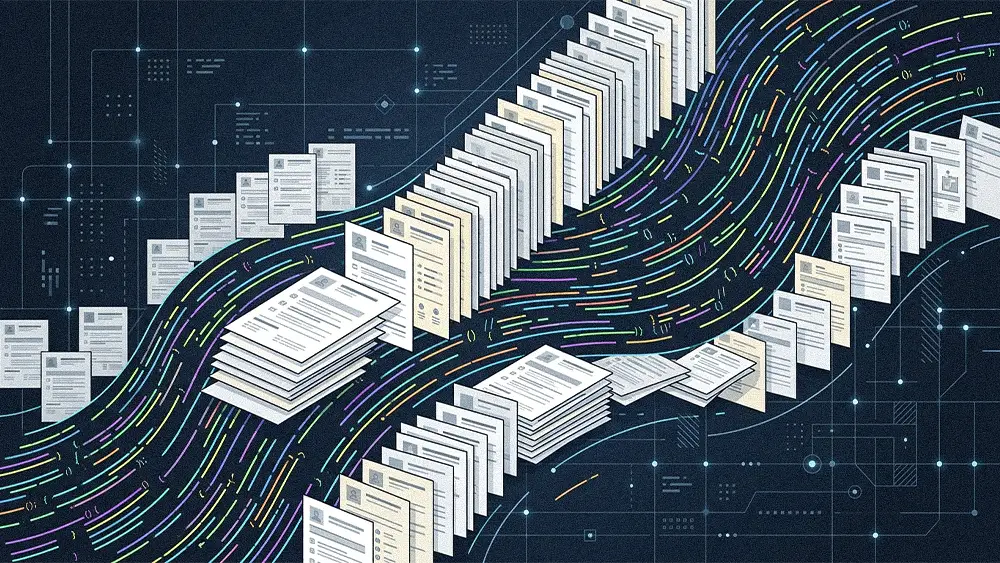
Employees can correct what’s wrong in their HR file. They have no such process for the profile their AI tools are building in the background. Every client mentioned in an email draft, deadline discussed in a planning session, and priority shared in a prompt becomes another clue about their role and how they work. Over time, the tools fill in the gaps, turning scattered details into a confident picture that may be incomplete, outdated, or simply wrong. That picture then shapes the advice they give back.
Brendan Rodgers is the Founder of Thread & Stack, a London consultancy that designs information architecture for client teams and builds knowledge bases that can grow with them. Before launching the company last year, he spent more than a decade in brand marketing across global consumer brands, following an earlier career in charity fundraising. That background led him to see AI adoption as a behavior question before a software one, and to begin auditing what his own tools believe about him every quarter.
"How we show up to our tools can shape the advice they give us. When a tool understands your full picture, you get a better assistant," Rodgers says. Each tool had built its view from a different part of his working life, and the errors followed from that.
What the check turned up
The claims Rodgers had to correct covered his positioning, his career history, his skills, and who he works with, which is the same material a manager would use to decide what someone should be working on. "Going through my system, I had over 600 claims from the different AI tools, and 400 of them I had to reject and correct," he notes.
Some of it came from connections he had never discussed with the tools at all. Memory has improved enough for a system to draw inferences across months of separate sessions, and nothing in the output separates what he told it from what it worked out on its own. "It's really helpful to work out where each of these tools thinks I'm at versus where I really am," Rodgers says.
The tools also disagreed with each other. One held a working view of where his business was headed. Another, which he uses outside work, knew his video game habits and his sister's name. The same question put to each comes back differently, and neither signals the gaps. Anyone running more than one tool has the same spread. For a company, that means the assistant advising someone on a piece of work may be operating on a role or a set of priorities that stopped being true months ago.
A record with no dispute process
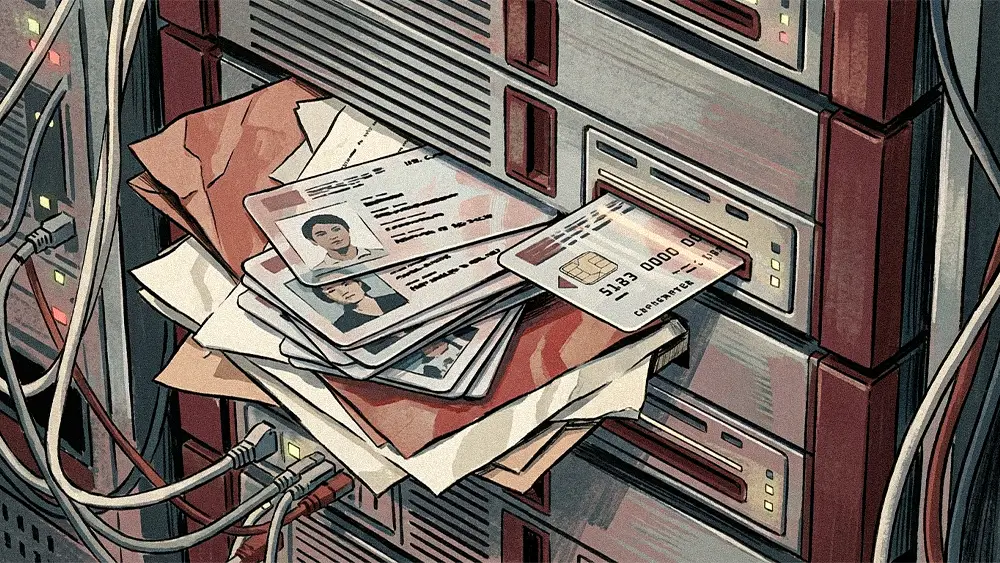
Nobody owns the accuracy of these records. An employee cannot see what a tool has concluded about them without going looking, and nothing in the organization prompts anyone to. The record keeps building either way.
Rodgers looks to data protection law for the standard. "At the core of it is a spirit very similar to GDPR, which is you should not be storing data you don't need," he observes. GDPR also gives people the right to see what an organization holds about them and correct what is wrong. Neither principle has reached the tools where these records take shape.
The fix at the individual level is a written rule about what each tool retains. Rodgers set his up so that if a client mentions something personal during a recorded meeting, the notes drop it before it reaches his client files. Any team can write the same kind of rule for the categories it does not want stored, and it takes a few minutes. "It's becoming vital that we approach creating profiles and understanding what should be remembered and what shouldn't be remembered," he warns.
Companies have limited visibility into whether any of that is happening. Nearly half of employees use AI regularly on company devices, and two-thirds of that use runs through non-corporate accounts. A record built on a personal account sits where the employer cannot review it, and little of that is defiance. People reach for whatever is available when the approved option is missing or unclear.
Interviewing for data judgment
AI fluency has become a line on job descriptions, and there is now a credential to match it. Anthropic and others run free fluency courses with certificates attached, most of them short and open to anyone. That gives a hiring manager something to screen against, and it tells them very little, because the range those certificates cover is enormous. "The core must be the understanding about the flow of data and how that has become almost like the flow of IP and business responsibility," Rodgers says.
The useful interview question is what a candidate does with information they are unsure about, because the answer shows whether they have thought about where data travels once it leaves them. A second question worth asking is whether they have ever looked at what their own tools have concluded about them. AI skills are already among the hardest to hire for, which makes the distinction worth getting right at interview.
Deciding what a tool should know
Telling staff that outside tools carry consequences moves the behavior somewhere the company cannot see, and it assumes leadership can track a market that changes weekly. More than half of workers already hide their use of AI from managers and colleagues, and a ban gives them another reason. Even as a Notion-certified AI Ops consultant, when all the tools, like Notion, Anthropic, and OpenAI, are in rapid-fire feature release cadences, it can be a challenge for Rodgers to keep up with what tools have what features. "If someone in my position is struggling to track what abilities are rolling out across my tools, then how can someone running a business be expected to understand how their entire tech stack is delivering new features?" he asks.
He recommends a quarterly conversation. Ask what people are using and what is missing from what they have been given. The answers surface unapproved tools without anyone having to confess, and they create a scheduled moment to look at what those tools have recorded. "The most accountable method would be to do quarterly sense checks about how everyone's getting by with the tools," Rodgers adds.
Some of what surfaces will be records that hold too little. A tool working from one slice of someone tends to agree with that version of them. The advice comes back confident and narrow, and the employee has no reason to question it. Fixing that means giving the tool more, and more is where leaders have to draw a line. "A full picture of who I am includes sensitive information. If an AI has built an inaccurate history about financial, career, medical, or personal details, it might draw incorrect conclusions and log those within the organization's understanding of me as a user," Rodgers says.